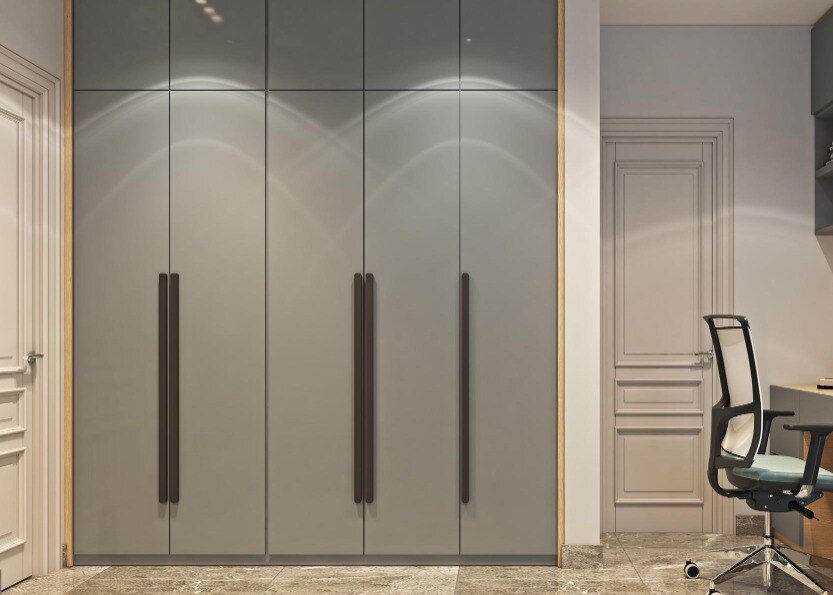
Humidity above 60% can turn a wardrobe into a site for swelling, mould, odours, peeling laminate, rusted hardware and sticking shutters. By measuring bedroom humidity, stopping seepage, improving air movement and adapting your storage and cleaning routine, you can prevent damage before cosmetic repairs become structural replacements.
Key takeaways
- Keep bedroom relative humidity below 60%, ideally between 30% and 50%.
- Use a digital hygrometer to identify humid-air problems before damage spreads.
- Inspect edges, back panels and floor connections for swelling or mould.
- Replace panels when swelling, delamination or structural damage cannot be cleaned safely.
Find Where Thane Monsoon Moisture Is Entering the Wardrobe
A digital hygrometer and a physical inspection reveal what is causing the damage. Keep bedroom relative humidity below 60%; the EPA’s preferred range is 30% to 50%. A musty smell or swollen shutter signals a problem, but moisture measured in the room tells you whether humid air is involved.
1. Place the hygrometer at wardrobe height, away from the window, bathroom door, air-conditioner outlet and direct sunlight. Record the reading morning and evening for three days. A reading above 60% needs action; a consistently dry room with damp panels points to seepage rather than room air.
2. Empty the wardrobe and inspect the back panel, bottom corners, shelf-pin holes and drawer runners. Look for dark spotting, peeling laminate, rust, swollen board or water marks.
3. Check the wall behind and beside the unit, especially an external wall, bathroom-adjoining wall and window edge. Feel for cold damp patches, inspect paint bubbling, and check whether rainwater collects at the skirting or floor.
4. Look underneath the wardrobe for damp flooring, failed skirting, or a bottom edge touching the floor. A leak must be repaired before coatings, desiccant pouches or a dehumidifier can solve the problem.
5. Remove damp clothes before closing the shutters. Open the unit briefly during a dry part of the day for inspection, but do not leave it open throughout a rainy, high-humidity spell.
This method is central to how to protect wardrobes during monsoon in Thane and prevents wardrobe humidity problems in Thane from being mistaken for a storage-product issue. Document the hygrometer readings and photographs before arranging repairs.
Use a Daily and Weekly Routine to Keep Storage Dry
Keep bedroom relative humidity below 60%; aim for 30% to 50% on a digital hygrometer. For wardrobe care in monsoon in thane, check the reading each morning and ventilate during the driest part of the day, not while rain or outdoor humidity is entering freely.
- Open shutters and drawers periodically, then close them before the room becomes damp.
- Remove wet towels, rainwear, shoes and damp clothes; dry them elsewhere before storage.
- Leave a small circulation space behind clothes and avoid filling shelves tightly.
- Wipe visible condensation from shutters, shelves and metal runners with a dry cloth.
- Keep silica-gel or other desiccant pouches inside drawers and small compartments, and replace or regenerate them according to the label.
- Run an exhaust fan or air-conditioner dry mode when the hygrometer remains above 60%; verify the humidity instead of judging dryness by room temperature.
Once a week, empty one section at a time and inspect the back panel, bottom corners, shelf-pin holes, drawer runners and floor-level edges. A musty smell, speckled growth or swollen board needs attention before it spreads.
Check the wall behind a freestanding wardrobe and keep its designed air gap clear; do not create a sealed cavity by pushing it against a damp wall.
This routine makes monsoon bedroom storage in thane easier to monitor, but it cannot correct seepage. If the weekly reading stays high or the same corner returns damp, investigate the wall, floor or plumbing source rather than adding more pouches.
Protect the Wardrobe’s Panels, Edges, Back and Floor Connection
A laminate face does not make a wardrobe waterproof. To protect wooden wardrobe from moisture, seal the substrate at every exposed edge, screw hole, shelf-pin hole, cut-out and joint; these points absorb water before the middle of the panel shows damage.
Fix the source first—wall seepage, a wet bathroom wall, window-edge leaks or a damp floor—because coatings cannot stop active water entry.
| Material or detail | What it provides | Limitation |
|---|---|---|
| BWP plywood, IS 303 | Better resistance to humid conditions | Unsealed edges and standing water still cause swelling |
| Marine plywood, IS 710 | Higher water resistance for vulnerable carcass areas | It is not immune to prolonged seepage |
| Moisture-resistant MDF | Suitable for dry, sealed interiors | It is not marine plywood and cannot cure a damp wall |
| Laminate with sealed edge banding | Protects the face and exposed substrate | Laminate alone does not seal the core |
| Raised plinth or PVC/aluminium legs | Keeps the bottom edge above floor moisture | The wall behind the wardrobe still needs inspection |
Ask Grace Modular Kitchen & Interior to show the edge-banding detail, back-panel material and floor connection on the drawing, not just the laminate sample. Specify a sealed or moisture-resistant backing panel, clearance from a damp wall, and no sink-like horizontal ledges that collect condensation.
- Use a raised plinth and seal its floor junction.
- Keep the bottom edge off wet flooring.
- Inspect peeling laminate, swollen edges, soft board and rusty screws before repair.
- Do not apply oil, polish or varnish over damp wood; trapped moisture worsens hidden mould.
Related product
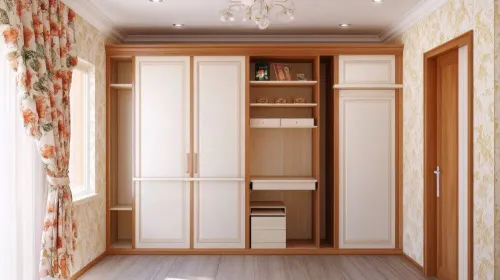
 | Wardrobe Wardrobe ₹85000 Grace Interior, a respected interior design and renovation company in Thane, has built a strong reputation for offering high-quality wardrobe... |
Choose the Right Moisture-Control Method for the Room
Ventilate when outdoor air is drier than the bedroom: open windows and wardrobe shutters during a dry part of the day, then close them before rain or evening humidity rises.
An exhaust fan helps remove moisture from a bathroom, kitchen or utility area; a bedroom exhaust fan is useful only when it sends damp air outdoors rather than into another room.
| Method | Use it when | Limitation |
|---|---|---|
| Ventilation | Outdoor air is dry and the room needs fresh air | It can import moisture during rainy spells |
| Exhaust fan | Removing steam at its source after bathing or cooking | It cannot fix seepage or a damp wall |
| Air-conditioner dry mode | Bedroom humidity remains high for a few hours | It may cool the room without reaching a safe level; check with a hygrometer |
| Dehumidifier | Humidity stays above 60%, or cooling is unwanted | Empty the water tank and clean the filter |
| Silica gel | Drying drawers, shoe cabinets and small enclosed compartments | Pouches saturate and do not treat room air |
| Calcium chloride | Placing a disposable moisture collector in a closed cabinet | Brine can spill; keep the container level and replace it when full |
| Charcoal | Reducing stale odour in a cabinet that is already dry | It is not a reliable humidity-control method |
For wardrobe humidity problems in Thane, choose a compressor or desiccant dehumidifier for room-scale moisture. Keep a freestanding wardrobe clear of a damp external wall so air can circulate and you can inspect behind it; follow the designed gap around skirting.
This matters in monsoon bedroom storage in Thane because a dehumidifier cannot stop active wall, window-edge or floor seepage.
Clean Mould Safely and Recognise Damage That Needs Replacement
A small mould patch on a hard, finished surface is safe to clean only after you stop the moisture source. Open windows, keep children away, and wear an N95 respirator, rubber gloves and eye protection. Do not dry-brush the mould, because that spreads spores.
- Wipe the area with a disposable cloth dampened with detergent and water.
- Clean the surrounding surface, not just the visible spot.
- Dry it completely with ventilation; do not close the wardrobe while it remains damp.
- Bag the cloth and contaminated disposable materials before discarding them.
- Never mix bleach with ammonia, vinegar or any other cleaner.
This approach helps with how to protect wardrobes during monsoon in Thane, but it will not rescue mouldy MDF, particleboard, fabric liners or a porous back panel. Mould can grow inside these materials, so repeated surface wiping only hides the problem.
Isolate heavily affected boards and arrange professional assessment when mould covers about 10 square feet, keeps returning, smells strong after cleaning, or follows a wall leak.
Replace panels that feel soft, crumble, delaminate, swell at the edges or no longer hold screws. Replace badly corroded hinges and tracks when shutters stick or sag. Let sound wood dry fully before repair; do not apply oil, polish or varnish over dampness, because the coating can trap moisture.
A moisture inspection is the safer way to protect wooden wardrobe from moisture when swelling extends beyond one small area.
Frequently asked questions
How can you find where monsoon moisture is entering a wardrobe in Thane?
Measure bedroom relative humidity with a digital hygrometer, then inspect the wardrobe’s shutters, edges, back panel, floor connection and nearby walls for swelling, dampness, leaks or mould.
What routine keeps wardrobe storage dry during the monsoon?
Check humidity and musty smells daily, keep clothes dry before storage, allow air circulation, and inspect the wardrobe weekly for damp patches, mould and swollen edges.
Which wardrobe parts need protection from monsoon moisture?
Protect panels, exposed edges, the back of the wardrobe and the floor connection because these areas absorb moisture and can swell, delaminate or develop mould.
What moisture-control method suits a humid bedroom?
Choose the method based on the room’s measured humidity and moisture source: improve ventilation, use air-conditioning or dehumidification, and add moisture absorbers where appropriate.
When should mouldy wardrobe panels be replaced?
Clean small surface mould safely, but replace panels when swelling, delamination, persistent dampness or structural damage remains after the moisture source is controlled.
Keywords