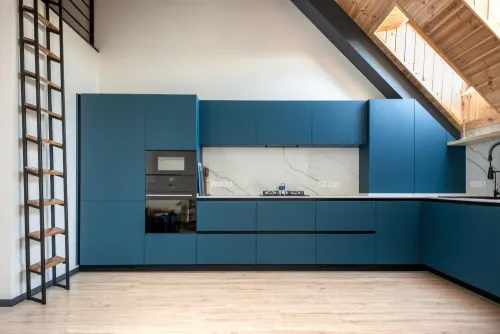
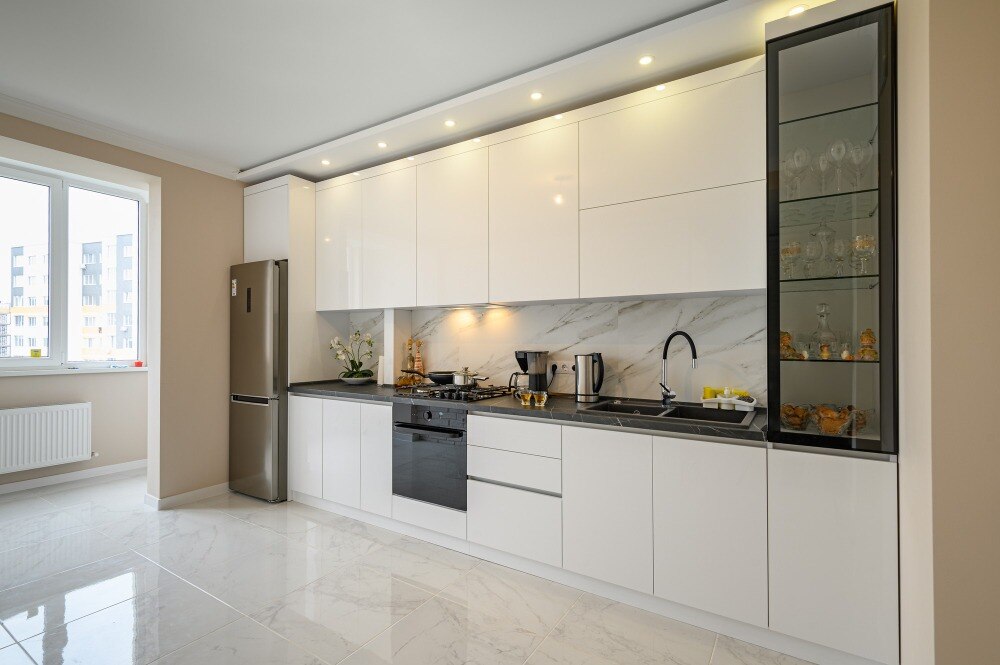
Thane’s monsoon humidity is rarely the only threat to a kitchen: repeated dampness, plumbing leaks, wet utensils and poorly sealed edges cause damage first. By the end, you will know which materials and construction details suit each wet zone, how to operate and ventilate the kitchen, and what to demand in a quotation.
Key takeaways
- Seal every exposed panel edge, especially beneath the sink.
- Choose moisture-resistant boards with durable laminate or acrylic surfaces.
- Keep wet-zone cabinets dry, ventilated, and clear of standing water.
- Specify edge sealing, hardware, warranties, and installation tolerances in writing.
What Fails First in a Thane Monsoon Kitchen?
Yes, a modular kitchen for monsoon humidity in Thane can last, but only as a moisture-managed assembly. Humid air alone rarely destroys a cabinet immediately; repeated wetting and drying make wood-based panels expand and contract, loosening joints and opening unsealed edges.
| Moisture source | What it does | First places to inspect |
|---|---|---|
| Airborne humidity | Slows drying and changes panel moisture content | Joints, screw holes and cut edges |
| Condensation | Leaves repeated surface moisture on cooler walls or hardware | Exterior-wall corners and metal fittings |
| Splashed water | Enters exposed edges and countertop cut-outs | Sink cabinet, dishwasher cabinet and plinth |
| Persistent leak | Keeps the material wet until swelling, delamination or corrosion begins | Trap, hose, plumbing opening and cabinet bottom |
Inspect these points before blaming the large laminated faces:
- Sink cut-outs and plumbing openings
- Screw holes, joints and machined edges
- Cabinet bottoms and lower exterior-wall corners
- Areas beside a dishwasher, utility zone or wet balcony
A humidity resistant kitchen in Thane needs more than a moisture-resistant board. That label does not make a panel waterproof, and marine plywood still fails when standing water reaches its edges or hardware. Edge sealing, accessible plumbing, a protected sink-base bottom and ventilation matter as much as the surface finish.
Which Kitchen Materials Handle Humidity Best?
Marine plywood made to IS 710 offers stronger water resistance than general-purpose plywood covered by IS 303, but neither survives exposed edges or standing water without protection. Request the exact grade, thickness, adhesive class and test documents, then specify sealed edges.
| Material | Core and surface performance | Best humidity use |
|---|---|---|
| Marine plywood | Stronger water resistance; laminate or acrylic protects the face, while ABS/PVC edge banding limits swelling and delamination | Sink, dishwasher and exterior-wall cabinets |
| Moisture-resistant MDF or HDHMR | Smooth shutters and drawer fronts; machined edges and screw holes remain vulnerable | Protected shutters and dry upper storage |
| Particle board | Economical, but wetting causes faster swelling and panel replacement | Dry, well-protected upper cabinets only |
| PVC or aluminium | Tolerates direct water, but compare screw-holding, load capacity, thermal movement, visible joints and repairability | Selected sink or utility zones, not automatically every cabinet |
Acrylic and laminate protect only the face. The substrate, edge adhesive and cut-outs decide what happens after water enters. Specify waterproof adhesive where appropriate, corrosion-resistant hinges, drawer channels, screws and baskets.
Compare the complete cost, not the board rate:
- cleaning effort and delamination risk
- replacement of damaged panels after a leak
- hardware life and service access
- total assembly cost
These kitchen materials for humidity suit a modular kitchen for humid weather in Thane when wet zones receive stronger detailing than dry storage. Seal sink and dishwasher cut-outs, and use washable liners or replaceable bottom panels.
How Should Wet-Zone Cabinets Be Built and Sealed?
Seal the edges before the cabinet is installed; decorative laminate cannot protect an exposed board edge. A humidity-resistant kitchen in Thane needs a sealed barrier at every opening, joint and service point, not just a water-resistant panel.
- Apply ABS or PVC edge banding where it suits the board and finish. Seal exposed edges and every cut-out for the sink, gas pipe, socket and plumbing with the specified edge band, coating or sealant.
- Apply silicone at the sink-to-counter joint and other movement-prone wet junctions only after cleaning and drying both surfaces. Seal countertop cut-outs correctly; the sink rim or appliance must not be the only barrier.
- Raise the carcass on a washable plinth that keeps it above mop water and minor flooding. Use a removable access panel so you can inspect for leaks and control pests without destroying the toe-kick.
- Fit the sink cabinet with a drip tray or liner, a replaceable or protected bottom panel, accessible plumbing and enough clearance to spot and clean standing water.
- Add extra sealing and corrosion protection beside a dishwasher, washing machine or utility area, near a window and against an exterior wall. These zones need more protection than dry upper storage.
- Treat “water-resistant,” “waterproof,” “marine,” and “waterproof adhesive” as different claims. None allows standing water, concealed leaks or a submerged cabinet; marine plywood and kitchen materials for humidity still fail when water reaches unsealed edges and hardware.
How Do You Organise and Dry Monsoon Kitchen Storage?
Build monsoon kitchen storage in Thane around airflow and drying time, not maximum enclosure. Keep wet vessels outside closed drawers until their surfaces are dry, and leave clearance around frequently used items in the sink base so trapped moisture can escape.
- Line cabinets with washable or replaceable liners, not fabric that remains damp.
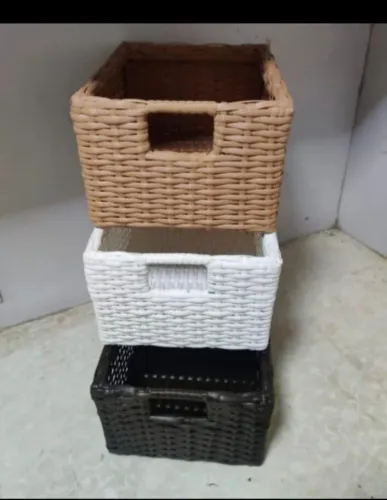
- Keep vegetables in ventilated baskets when they are not fully dry; sealed boxes trap condensation and speed spoilage.
- Store cleaning products in a separate compartment from food and airtight food containers.
- Wipe spills from cabinet edges immediately. After a leak, heavy cleaning or plumbing work, open the sink cabinet to dry it when safe.
- Check beneath the sink, behind the plinth and around dishwasher connections during wet spells. A small leak can damage concealed edges before you see swelling or mould.
- Run the exhaust fan or chimney while cooking, and confirm that it discharges outdoors rather than into a false ceiling or closed duct void.
- Cross-ventilate when outdoor conditions permit, briefly open cabinet doors after steam-heavy cooking, and dry the counter and sink surround.
- During prolonged damp periods, use air-conditioning or a dehumidifier; clean its filters, drains and condensate hoses.
- If mould recurs, monitor the room with a hygrometer. The US EPA recommends indoor relative humidity below 60%, ideally 30% to 50%.
These operating rules matter in any modular kitchen for humid weather in Thane because ventilation reduces dampness duration but cannot correct a plumbing leak or standing water.
What Should You Put in the Specification Before Installation?
Put a zone-by-zone written specification in the quotation, not a general promise of a “waterproof kitchen.” It should identify the board core, grade, thickness, IS 710 or IS 303 reference where applicable, laminate or shutter finish, edge treatment, adhesive, silicone details, plinth height and material, sink-base liner, countertop cut-out sealing, hinge and drawer-channel finish, and plumbing access.
Ask the installer to document these points:
- Which panels, liners and plinth parts are replaceable after a leak, and how unfinished edges, screw holes and cut-outs will be inspected before cabinets are closed.
- For a commercial kitchen or heavily used home, separate wet and dry storage, washable liners, corrosion-resistant hardware, service access for cleaning, and drawer channels rated for frequent, heavier cycles.
Compare the complete assembly and each risk zone, not the lowest board rate.
| Zone | Specify | Why it matters |
|---|---|---|
| Sink or dishwasher | Sealed edges, liner or drip tray, corrosion-resistant hardware, sealed cut-outs | Traps and connections create concealed leaks |
| Window or exterior wall | Protected bottom edges, raised plinth, inspection access | Splashing and condensation reach lower corners |
| Dry storage | Standard sealed carcass, ventilated storage, serviceable hardware | It needs less water protection |
Grace Modular Kitchen & Interior can help map a modular kitchen for monsoon humidity in Thane by assigning different materials to sink, dishwasher, window and dry-storage areas. A humidity resistant kitchen in Thane becomes dependable when construction, ventilation and maintenance address water at every interface.
Related product
 | Kitchen pix ₹100000 Grace Interior in Thane is a trusted name in home renovation and interior solutions, and one of their most appreciated offerings is their... View product → |
Frequently asked questions
What fails first in a Thane monsoon kitchen?
Unsealed panel edges, sink-base cabinets, hinges, and joints face the greatest risk because repeated wetting and drying cause swelling, corrosion, and loosening.
Which kitchen materials handle humidity best?
Compare moisture-resistant plywood, HDHMR, and properly sealed boards, then inspect the laminate, edge banding, adhesive, and hardware as a complete system.
How should wet-zone cabinets be built and sealed?
Use sealed panel edges, a protected sink cabinet base, leak-resistant plumbing access, corrosion-resistant hardware, and enough clearance to prevent standing water.
How do you organise and dry monsoon kitchen storage in Thane?
Leave air gaps, avoid packing damp cookware, wipe spills promptly, keep ventilation paths clear, and separate wet items until fully dry.
What should you put in the specification before installation?
Record board type and thickness, surface finish, edge-sealing method, hardware grade, sink-area protection, installation clearances, leak testing, and warranty coverage.
Keywords